Evaluation Is the Bottleneck Nobody Budgets For
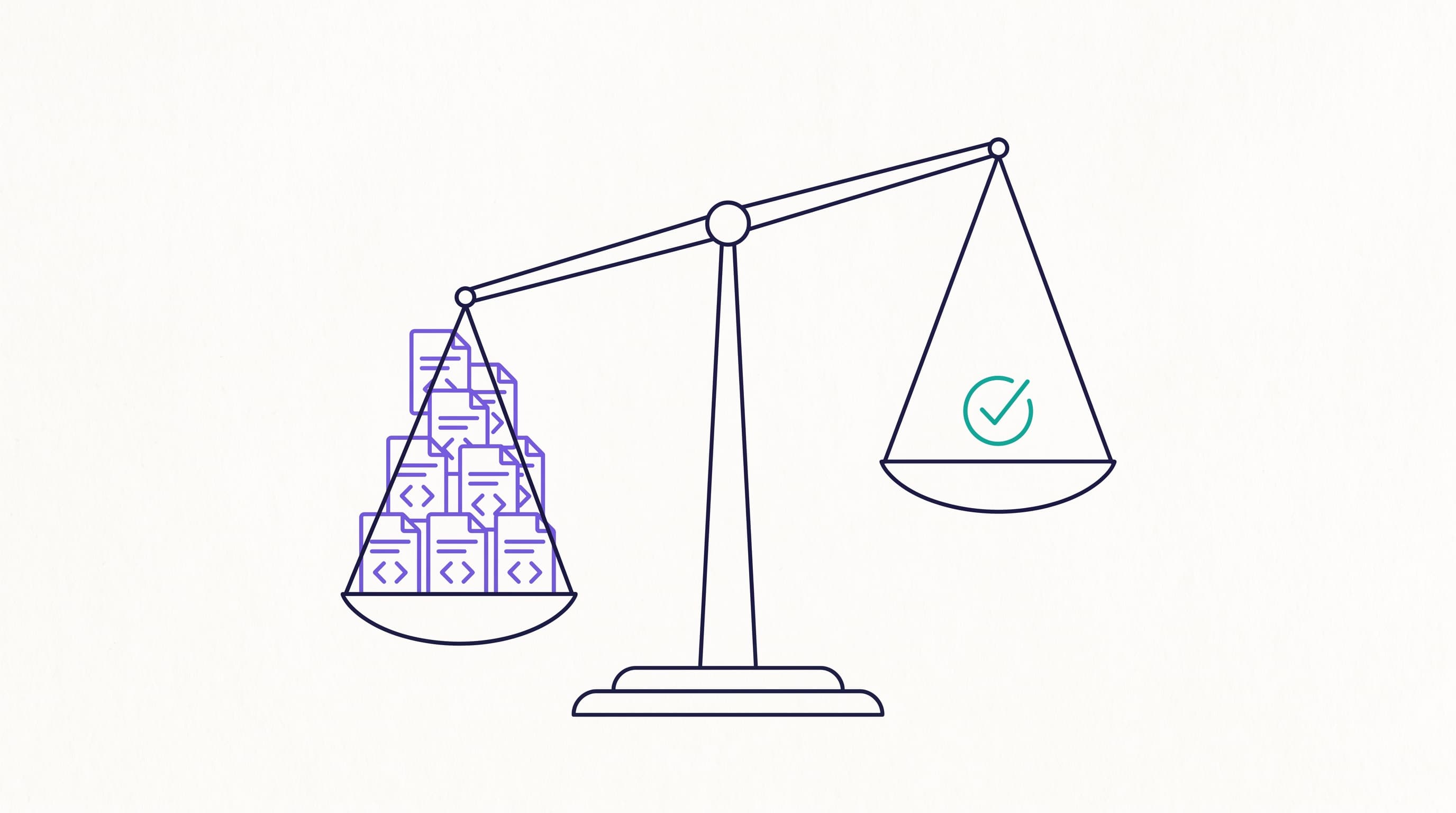
Ask most teams building an LLM feature how they know it works, and the honest answer is usually "we tried it on a handful of examples and it looked good." That's a reasonable way to start. It's not a reasonable way to decide something is ready to ship, and it's the single biggest reason LLM features stall indefinitely in review — nobody can say with confidence whether a change made things better or worse, so nothing ships.
Why this gets skipped
Evaluation gets skipped because it doesn't feel like progress the way a better prompt or a new feature does. Writing thirty test cases with known-correct answers is unglamorous, and it's tempting to keep iterating on the model or the prompt instead, because that feels like forward motion. But without an evaluation set, every prompt change is a guess about whether it helped, checked against whatever examples happen to be top of mind that day — which is exactly the kind of inconsistency that makes stakeholders lose confidence in the whole feature.
What a minimum viable eval set looks like
It doesn't need to be sophisticated to be useful. Twenty to fifty real examples — actual queries a user would ask, each with a correct answer and, where relevant, the source material that justifies it — is enough to turn "does this feel better" into a number that moves. The set should include the easy cases that must never break, and a handful of the hard, ambiguous ones that are actually where quality differences show up.
- Pull real examples from actual usage or support tickets, not hypothetical questions.
- Include edge cases and known failure modes, not just the happy path.
- Score with something more specific than "good/bad" — factual accuracy, completeness, and tone are different failure modes.
- Re-run the full set on every meaningful prompt or model change, not just spot-checks.
The payoff is organizational, not just technical
Once a team has a real evaluation set, the conversation changes. "Is this ready to ship" stops being a subjective debate and becomes a question with a number attached. That's what actually unblocks shipping — not a better model, and not a cleverer prompt, but the confidence that comes from being able to measure the thing you're arguing about.