What We Learned Shipping a Generative Image Pipeline at Scale
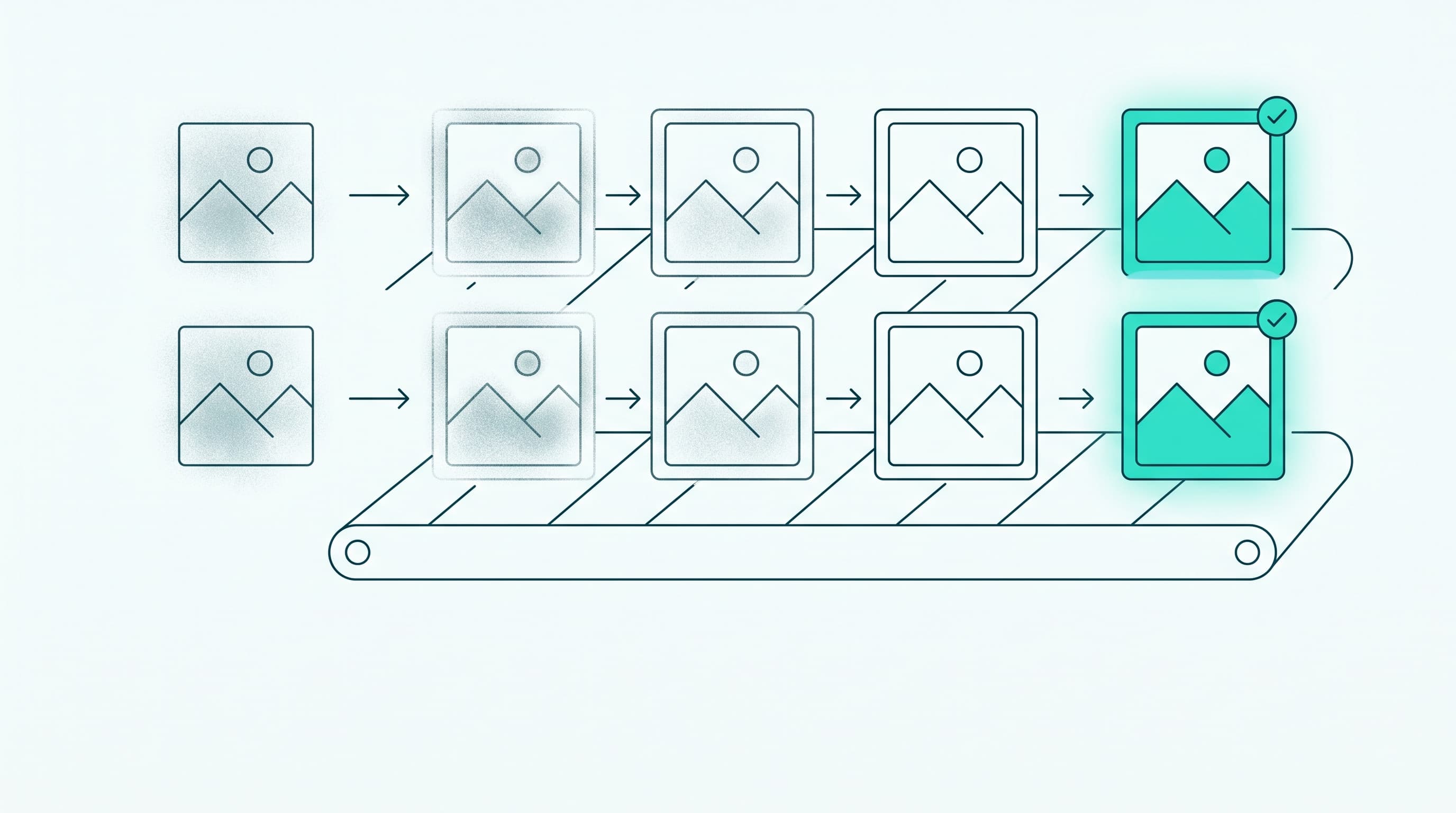
Everyone underestimates the gap between "the model can generate a good-looking image" and "the pipeline can generate a good-looking image reliably enough to publish unattended." That gap is where most of the real engineering work lives, and it's almost entirely invisible in a demo.
Fine-tuning gets you 80% of the way, fast
LoRA fine-tuning on a modest set of existing product photography gets a diffusion model surprisingly close to a brand's visual identity within days, not months. That part of the project is genuinely fast now. The mistake is assuming that 80% is close enough to ship — it's close enough to demo, which is a different bar. The remaining 20% is where lighting inconsistency, subtle color drift, and occasional anatomical or geometric errors live, and those are exactly the errors that make an image unpublishable rather than merely imperfect.
Automating the QA step, not skipping it
The pipeline that made this viable at volume wasn't a better model — it was an automated quality gate sitting between generation and publishing. Every generated image passes through a set of automated checks before a human ever sees it: a color-consistency check against brand reference swatches, a composition check that flags obviously malformed output, and a similarity check against recent outputs to catch the model getting stuck in a repetitive mode. Images that fail get regenerated automatically; only the ones that pass reach a lighter human review step, which turned what would have been full manual QA into a spot-check.
- Queue-based generation with automatic retries, not a single synchronous call per image.
- Automated brand-consistency checks before anything reaches a human reviewer.
- A feedback loop where rejected images inform future fine-tuning data, not just get discarded.
- Cost tracking per image from day one — generation cost at scale is easy to lose track of until the bill arrives.
The result
What shipped wasn't just "a fine-tuned model" — it was a pipeline that turned a manual photoshoot bottleneck into an on-demand step in the catalog workflow, with humans reviewing exceptions instead of everything. That reframing — from generation as the product to the pipeline around generation as the product — is the difference between a fun prototype and something a business can actually run on.