MCP Is the Missing Layer Between Agents and Your Actual Systems
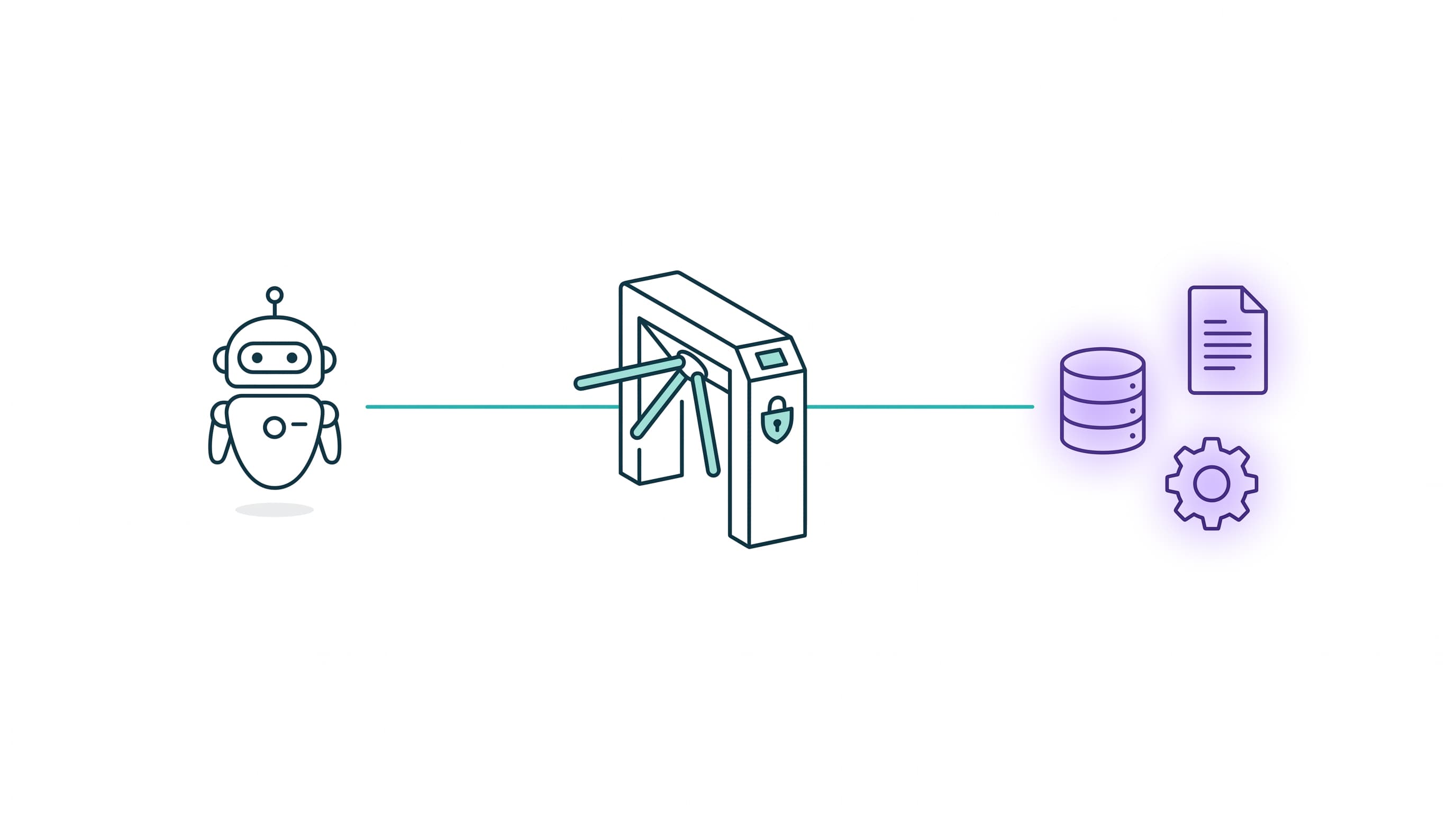
Tool calling has been technically possible since function-calling APIs shipped. What's changed with the Model Context Protocol isn't the concept — it's that MCP gives tool integration a shared, inspectable interface instead of every team building a one-off, undocumented bridge between a model and their internal systems.
The problem MCP actually solves
Before a standard existed, every agent integration was bespoke: custom function schemas, custom auth handling, custom error formats, none of it reusable across agent clients or across tools. That meant every new system an agent needed to touch was a new integration project, and every integration carried its own, usually under-reviewed, security model. MCP standardizes the boundary: a server exposes a defined set of tools with typed schemas, and any MCP-compatible client can use them the same way, without bespoke glue code per pairing.
Scoping is the actual engineering work
The part that takes real design effort isn't the protocol plumbing — it's deciding exactly what an agent should be allowed to do, and enforcing that boundary on the server, not by hoping the model behaves. A knowledge-base tool that can search is very different from one that can also edit, and a support-ticket tool that can read tickets is very different from one that can close them. The server needs to enforce per-user, per-action permissioning explicitly; an agent that inherits a service account's full access because it was easier to wire up is a production incident waiting for a strange prompt.
- Design each tool around the narrowest capability that gets the job done — search before write, read before delete.
- Enforce the calling user's actual permissions server-side, not the agent's or the service account's.
- Log every tool call with enough context to reconstruct what happened and why, after the fact.
- Assume the model will eventually call a tool with malformed or adversarial input, and validate accordingly.
Where this is heading
As more internal systems get MCP servers built in front of them, the pattern that's emerging looks a lot like API design did a decade ago: the organizations that treat tool schemas, versioning, and permissioning as first-class engineering work end up with agent integrations that survive contact with real usage. The ones that treat it as a quick wrapper around an existing API usually end up rebuilding it once an agent does something in production nobody scoped for.